Wednesday, October 3, 2012

Geoscientific studies, Geoscientific studies for the conservation of Ajanta Caves

General, Archaeological Survey of India, 2010.

v, 365 p. : ill. (chiefly col.), col. maps (some folded) ; 29 cm.

USD 72.35

DK-222466

A World Heritage Site since 1983, Ajanta Caves are a group of 30 rock-cut caves.  Which, over the time, have left millions around the world simply mesmerized, with the incredible artistic and technological achievements of ancient India!  Located at about a hundred kilometres from Aurangabad (Maharashtra), these cave monuments are adorned with fascinating murals and sculptures, acclaimed to be the masterpieces of Buddhist art.  The caves – cut out, side by side, in the Deccan basalt: from around 2nd century BC to about 600 AD – unmistakably exemplify an awe-inspiring technological exploit of ancient India.


The natural weathering and erosion over the centuries, together with retreating scarps have not only resulted in the degradation of slopes, but have had damaging impact on the sculptures and paintings in the caves and in their environs.  Biotic interference has further deteriorated the caves and their surroundings.  In 1998, the Archaeological Survey of India (ASI) engaged the Geological Survey of India (GSI) to carry out multidisciplinary geo-scientific studies of the caves site.  And, for the first time, the GSI studied out geological, geohydrological, and environmental conditions of the site.


Carrying out comprehensive geo-scientific studies for the entire Ajanta complex, the Geological Survey of India presented an excellent report on their findings in 2001, containing various thematic maps, damage assessment of the site from geotechnical perspective, and also their remedial measures.   This volume carries GSI’s report including, among other aspects, the geology of the Ajanta Cave area, its topographic and geophysical surveys, and seismic assessment; besides the results of their geotechnical and environmental studies of the caves.


Dr Manohar Sinha is the former Deputy Director General of the Geological Survey of India.

Tuesday, September 18, 2012

Bikaner golden jubilee, 1887-1937 Facsim. ed. -- New Delhi : Published by Dev Publishers & Distributors for Maharaja Ganga Singhji Trust, Bikaner, 2012

107 p. : ill. (some col.) ; 43 cm. USD 276.30 Reprint
ISBN 9789381406052

OCoLC#806637606

DK-223756
The book is an exquisite volume presenting the life and achievements of His Highness Maharajah Sri Ganga Singhji Bahadur of Bikaner who ascended the throne of Bikaner and reigned for 50 years (1887-1937).


The history of Bikaner is an account filled with heroic exploits of brave kings and their magnificent gallantry. Under the British, the state came to be governed by a Council of Regency, when Maharaja Ganga Singhji Bahadur ascended the throne as a minor. The new maharaja, Ganga Singhji, regained full ruling powers in 1898. The volume deals with his attempts to modernise the administrative machinery of the state and bring to the people the benefits of education and medical relief. It highlights his vision and perseverance and his commitment to re-build Bikaner by diverting waters of the Sutlej into the desert and making it a flourishing land of green fields, thriving villages and prosperous towns. It views his contributions a s a statesman and his administrative prowess in particular, and his achievements as a sportsman.


The focus of the volume is on the golden jubilee celebration in 1937 marking 50 years of his ascension of the throne. With numerous colourful pictures of the maharaja of Bikaner and some royal heirlooms, it gives a detailed account of the state celebration: the presence of many notable British and Indian officers and statesmen, speeches on the occasion, other events organised that included military tournaments and importantly the Jubilee Durbar when the Maharaja addressed the audience announcing introduction of numerous reforms to modernise the state. It also covers the crowning event of the Jubilee celebrations, that is, the magnificent elephant procession with which the viceroy made his entry into the desert city.

Monday, September 17, 2012

Archaeology of early Orissan temple

Archaeology of early Orissan temple : spatial context, patronage and survival / Subash Khamari. -- 1st ed. -- Delhi : Pratibha Prakashan, 2012. xiv, 270 p., [20] p. of plates : ill. (chiefly col.), 6 maps ; 28 cm. USD 122.70 ISBN 9788177022810 OCoLC#780139757 DK-222411
From the 6th to 11th centuries, there appeared, on Orissa’s sacred landscape, a large number of temples. Which exercised a powerful influence on the cultural life in this eastern Indian region. Earlier approaches to the study of temples tend to perpetuate an over-determined reading of art. They either objectify the temple aesthetically as a ‘non-living, static monument’ with architectural complexities; or institutionalize it as a symbol of royal legitimacy. As a result, temple architecture in Orissa is almost invariably discussed within a unilinear evolutionary context, ignoring its material and cultural basis that sustains it, as an institution. A marked departure from the existing studies, this book tries to explore the extended, and possibly continuous, relationship between temple and the community. “The monument,” says the author, “has also a life after its making and can interact with its users over a time in significant ways beyond the intention of its artists, reflecting the dynamism beneath its architectural configuration.” Subash Khamari’s study is perhaps the first effort to investigate the relationship between the Orissa’s temple and its community -- patrons, artists, priests, and laity, and how the temple played an important role in the cultural life of the region in the early centuries of the Common Era. Using wide-ranging sources, including architectural, epigraphic, and even ethnographic, the author painstakingly documents as many as 233 temples in the pre-Jagannath period: 6th-11th centuries – with focus on segmentation of space, elaboration, narratives, rituals, and survival of temple. “Khamari, thus, initiates a new direction in the study of the Orissan temple,” says Professor Himanshu Prabha Roy of the Jawaharlal Nehru University (JNU), New Delhi. Subash Khamari is currently Superintending Archaeologist, Archaeological Survey of India (ASI), Excavation Branch, Nagpur.

Thursday, August 2, 2012

Bangla deshi Books, Books of Bangladesh, Bengali Books

Bangla books free from our large Bangla Books library Our book reviews will help you to know about the Bangla Books of popular writers of Bangladesh.
http://bit.ly/N70eOF

Saturday, June 16, 2012

Indian Books

Encyclopaedia of Indian temple architecture

Indian books dkagencies, The 'Encyclopaedia of Indian Temple Architecture' comprises a vast research on the architectural features of Indian temples spread all over the Indian subcontinent. This encyclopaedic study is divided into forty-five chapters which delineate the various characteristics of temple architecture starting from the Gupta period (4th c.A.D.) to the Kashi Visvanatha temple rebuilt by Rani Ahilyabai of Indore (1776 A.D.). The work begins with an insight into the Indus Civilization that flourished in the Indus Valley region (now in Pakistan) with the two most important sites of Mohanjo-daro and Harappa revealing a marked degree of controlled urban planning.

As for the temple architecture, the Imperial Guptas had established their sovereignty over almost the whole of northern India and the regular building of structural temples in brick and dressed stone started in their regnal period. The period under their immediate patronage fully deserves the name ‘The Golden Age’ of Indian art and culture as aesthetic principles of architecture, sculpture and painting were formulated in their region. The Hindu temples evolved during that period with the basic features of the cella, the mandapa and the vestibule.
 
Encyclopaedia of Jaina studies

Indian books dkagencies, This volume entitled Jaina Art and Architecture is the first volume of the Encyclopaedia of Jaina Studies brought out by the Parshwanath Vidyapeeth to present a complete picture of the Jaina religion in its various aspects. The Encyclopaedia will cover, apart from Jaina art and architecture, Jaina spirituality, religious culture, Jaina literature, sciences, ceremonies, festivals and customs. The first volume, in Part 1, showcases Jaina art and architecture from the earliest time to the thirteenth century AD, collecting and collating the entire material on the subject in a chronological order, or thematic order where necessary. It discusses secular and religious buildings of the Jaina tradition in detail, referring to specific examples for scrutiny like the ruined Jaina stupa of Mathura, rock-cut Jaina caves excavated throughout the country and structural Jaina temples of North and South India. It studies the evolution of the style of Jaina architecture in a particular region.


The age of Traikutakas, coins, inscriptions and art


Dkagencies.com- Indian Books- This book is an attempt to understand the contributions of the Traikutakas, a dynasty that ruled over North Konkan in the 5th 6th century CE, by considering various types of data and art history related to them. This book primarily focuses on the artistic developments in this region during the reign of the Traikutakas and also details the motivational factors behind specific developments in art and architecture; further, there has been an attempt to assess their contributions to artistic developments and continuity in their position as the ruling dynasty of the region.

The first two chapters deal with the political career of the Traikutaka kings and the issues and problems related to their chronology. The third chapter deals with the 5 important copper plates of the 'Traikutaka Age' as well as the coinage issued by Traikutaka kings. Translations of two of these copperplates are published here for the first time. In the fourth chapter, the cultural background (5th and 6th century CE) is described using epigraphical, numismatic, and art historical data. An attempt has been made to understand art historical data by employing archaeological methods. The subsequent three chapters deal with Traikutaka architecture, sculptures & iconography, and their chronology. Finally, a brief review of the book with concluding remarks ends the book.


Encyclopaedia of Indian coins| ancient coins of northern India

Indian books dkagencies, Coins form an important source of the history of ancient India; in fact, for certain periods, like those of the Indo-Greeks, the Saka-Pahlavas, and the Western Kshatrapas, monetary issues are almost the only source of our information. In the Preface of his magnum opus, The Indo-Greeks, A K Narain very aptly remarks, 'For certain periods of Indian history the historian has to be a numismatist'.

In the A-Z encyclopaedia, there are some references at the end of each entry. They represent only those books, monographs, and research papers, which had a direct bearing on the subject. An Introduction, in the beginning, deals with such aspects of ancient Indian numismatics, as the origin and antiquity of coinage in India, and the authority to issue coins. This is followed by the A-Z encyclopaedia. In this, the issuers -- kings/queens, dynasties, tribes, etc, and the devices -- deities, symbols, etc, have been introduced briefly, mostly at the beginning of the respective entry, before dealing with the numismatic aspects. However, it was felt that the introduction of the political background of certain issuers, mostly kings, of the mythological background of certain deities, and the significance of certain symbols, deserves a somewhat fuller treatment, either by virtue of their importance, or their obscurity, even at the cost of some repetition. This has been done, again in an alphabetical order, in the Appendix, 'More About Some Issuers and Devices', which comes after the A-Z Encyclopaedia. All such entries in the body of the A-Z Encyclopaedia, as having a companion entry in the Appendix, have been indicated by means of a cross (†), placed at the end of the entry. A Select Bibliography is
given at the end for the benefit of those who wish to pursue further reading.


Indian Books Online, Indian Books Centre, Popular Indian Books, English Books in India, Kannada Books

Tuesday, June 12, 2012

Notable Works Pub by Marg Foun, Indian Books

Notable Works Pub by Marg Foun

Notable Works Pub by Marg Foun, Indian books dkagencies.com- Something old, something new : Rabindranath Tagore 150th birth anniversary volume / edited by Pratapaditya Pal.,2011 Price : USD 68.00 ( DK-211355 ( HBD ) ) Usually Ships In : 10 - 15 days

Christian themes in Indian art

Indian books dkagencies.com, ISBN: 8173049459, Surprisingly, perhaps, Christian themes are present everywhere in the mainstream market in India – even if they have been driven to the periphery in European art. Exploring ‘Christian themes in Indian art’, the authors here find that they aren’t new in India. Historically, they can be traced back to the 16th century, when the European Christian prints had an unexpected encounter with the Indian miniatures. At the court of Mughal Emperor Akbar, Christian miniatures were painted, copying the themes from engravings, which the three Jesuit missionaries had brought with them from Europe. This was the start of an amazing fusion in Indian miniatures. For the first time, this book examines Christian themes in Indian art: from the beginnings of Christianity in India till today.

The focus here is chiefly on paintings and sculptures, though the book also includes a chapter on architecture, studying largely the church buildings. Setting out stimulating perspectives on the ‘beginnings of intercultural encounter’, the book systematically explores Christian themes in the works of Bengali artists, the non-Christian artists, the Christian artists, and South Indian artists. In addition, the book also considers popular/folk Christian art, Warli paintings, and Hindu influence on Christian art. With illustrations, the authors present the works of numerous Indian artists that explicitly show the Christian content, including the paintings/sculptures of the internationally-known artists, like Jamini Roy, Arup Das, M.F. Husain, Krishan Khanna, Jehangir Sabavala, Satish Gujral, Anjolie Ela Menon, Francis Newton Souza, Angelo da Fonesca, Solomon Raj, Sister Claire, K.C.S. Panikar, S. Dhanpal, and S.P. Jayakar.


Felicitas essays in numismatics, epigraphy and history in honour of Joe Cribb

Indian books dkagencies.com, Joe Cribb, whom Felicitas seeks to honour, needs no introduction to any enthusiast of coins and paper money of Asia, specially of the Indian subcontinent. As a curator of South Asians Coins in the Department of Coins and Medals in the British Museum, and lately the Keeper of this department, Joe has had a ‘hand’ in a variety of numismatic activities.” Starting with Chinese coins, Joe moved to many other themes and subjects within the broader range of ‘Oriental’ numismatics and history, making invaluable contributions to highly controversial subject areas, like the inception of coinage in the Indian subcontinent and the chronological questions facing complex coinages in Central Asia.

Significantly, Joe Cribb’s academic interests not just centre around the broad theme of ‘Money’, which encompasses numismatics, but also go much beyond. Covering a vast time and space, the essays here deal with the most ancient of the sub-continental coinages as well as those that deal with the most modern and conventional forms of money, like banknotes. Among other specificities, the essays explore socio-historical themes associated with coinage, study iconography through coins, examine royal as well as religious coins icons seen on Kushan coins, offer fresh interpretation of the ‘Lion Pillar’ inscription from Mathura, and highlight the role/utility of coins in historical reconstruction from a conceptual perspective, analyzing the deployment of coins to underline archaeological and historical periods. Several other themes examined here include minting technology in Mughal India, pagoda coins of South East India, Kuninda and Kota coins of the Punjab, or how coins were used as a tool of diplomacy in the colonial India.


Science and metal technology of Harappans


9788174791078, Indian books dkagencies.com, Harappan civilization, though not the oldest, is the first known civilization in the Indian subcontinent. Already around 2,700 Harappan and Harappan-related sites have been reported in north-west South Asia – over an areal sprawl of two million square kilometers. Ganweriwala, the largest of Harappan sites in South Asia, covers an area of 250 hectares. Ever since its discovery, more specially during the last few decades, enormous research has gone into the Harappan/Indus Valley tradition of Pakistan and Western India filling in many gaps in our understanding of regional geography, settlement patterns, subsistence, specific technological developments and the chronology of these changes.

In 21 recent, well-researched papers, this volume is yet another effort to present an overview of the science, metal technologies and their role in this once-great civilization. Bringing together eminent scholars engaged in the systematic excavations, scientific studies, and research analysis in the field of Harappan archaeology and allied sciences, this volume shows how, ever since its discovery, archaeologists and archaeo-metallurgists have come upon a good range of metals, including notably copper, gold, silver, lead, tin, iron, bronze and zinc, from various Harappan sites, and how far they could make use of these metals. Supported by extensive scientific and archaeological data, the papers here present the entire tool repertoire of the Harappans, their arts and crafts, as well as their sophisticated, fairly advanced production technology – unambiguously articulated in the animal figures or the figure of a dancing girl and the kind of technological skills the production of these figures involved. Supplementing these papers are over sixty colour plates.

3D Children Story Books

Children Story Books
3D Children Story Books, Indian books dkagencies- Price : USD 19.55 ( DKNCT-1070 ( HBD ) ) Usually Ships In : 3D Children Story Books

 Indian Books Shop

Indian Books Shopping

Indian Books Shopping New Delhi

Indian books Shopping Delhi

Indian Book Shoppings

Indian Books Shoppings

Indian wind atlas


Indian books dkagencies, The Indian Wind Atlas is a result of combined effort of Centre for Wind Energy Technology (C-WET), Chennai, India and Riso DTU National Laboratory for Sustainable Energy, Roskilde, Denmark on the investigation of Indian Wind Climatology with a specific focus on wind resource assessment for harnessing wind energy. It gives an updated overview of the wind climatological situations of India, based on reliable measured wind data and using contemporary numerical meso scale models. It also seeks to provide an up to date methodology for applying to primary data and results of meso scale model for the purpose of wind resource assessment. The project involved extensive use of micro and meso scale models like, Wind Atlas Analysis and Application Programme (WAsP) and Karlsruhe Atmospheric Meso scale Model (KAMM) respectively in conjunction with super computers.


Sanskrit in China and Japan

Indian books dkagencies, Sanskrit in China and Japan This book covers the great academic exchange that took place between Indian monks and Chinese intellectuals during the first millennium of the Christian era. Information on Sanskrit linguistics transmitted by Indian monks helped Chinese intellectuals to evolve a phonetic system to read their pictographic script. It solved one of their greatest headaches. Introduction of the theories of Sanskrit prosody led to the innovation of a totally new genre of poems that became a part of the Chinese civil service examination. This genre is popular even today.

The Chinese theory of arts was influenced considerably by its Indian counterpart. The Chinese were, perhaps, the first to write on the Indian decimal system, and record the symbol for zero. Indian astronomers heading the imperial bureau of astronomy translated Indian astronomical treatise, and used methods given therein in astronomical calculations. Stories from Ramayana, Mahabharata and Panchatantra were popular among the masses. Thanks to Indian monks, the Chinese developed a great faith in mantras. Finally, a number of Sanskrit-Chinese dictionaries were compiled in China. These also carry information on ancient Indian political and social situation and legends. Many of these ideas migrated to Japan with far reaching consequences. Saroj Kumar Chaudhuri taught Japanese language in the School of Foreign Languages, Ministry of Defense, Government of India, Department of Chinese and Japanese Studies (currently Department of East Asian Studies), and College of Business Administration, Aichi Gakusen University, Toyoto City, Aichi Prefecture, Japan.


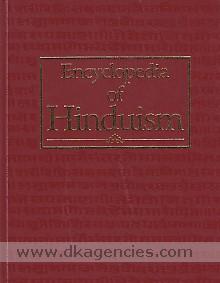
Encyclopedia of Hinduism

Indian books dkagencies.com, ISBN: 9788129115881 Hinduism isn’t a religious faith, but an entire civilization, a way of life. Defying a precise definition, it represents a whole civilization, a millennia-long tradition, and a rich cultural heritage – which, with a continuous history of more than five thousand years -- is enormously vast in scope, splendid in expression, profound in illuminating thoughts, and fantastic in flights of imagination. Hinduism is a veritably complex religious system, including a wide range of particular beliefs and practices. Because of this and its evolution over the centuries, there are no single and unequivocal rules to define what Hinduism is. Today, over a billion people call themselves followers of this tradition. Originating in India, millennia ago, the Hindu tradition has spread beyond the Indian subcontinent to Southeast Asia, reaching a far as the remote Pacific islands of Fiji.

There is no founder of Hinduism, nor was it founded at a certain time, or at a certain place. No single person has been responsible for launching Sanatana Dharma. There are many seers, sages and prophets, who have contributed and continue to contribute to the richness of the tradition, but none of them is regarded as the ‘founder’ of Hinduism. It has no beginning in history, nor does any single historical event mark the birth of the tradition. Actually, Hindus hold that truth is eternal, without beginning or end. Transcending boundaries, it is available to all. Truth manifests itself in many ways in different times and places. Hindu religion is not creedal -- it does not identify its adherents through a prescribed set of beliefs.

There are no exclusive theological doctrines or dogmas that are mandatory for everyone in the Hindu community. Then, Hinduism is not a missionary religion; it has no missionary movement or history. Proselytization has no place in Hinduism. Unlike every other major religion, Hinduism, thus, has no identifiable historical genesis, nor does it have any established church/supreme authority to dictate what it is or ought to be. It has rather grown as an irresistible natural religious force as a way of life; as a most elaborate, yet most complex, system which, in quintessential terms, has advocated coexistence; universal tolerance; and reverence for deities, for myths, for genuine aspirants (risis, sages, gurus) – with affirmation of a transcendent cosmic (divine) principle, and sophisticated analyses of baffling metaphysical issues. Ahimsa (nonviolence), one of the cardinal virtues of humanity, is the keystone of the Hindu ethics. What can be said is that Hinduism is a cultural-religious force that has given rise to a vast body of magnificent sacred literature, music, art, architecture, and philosophy.